Taking custody:
start with the basics.
A hardware wallet can help put you in control. A few mindful habits help you stay there.
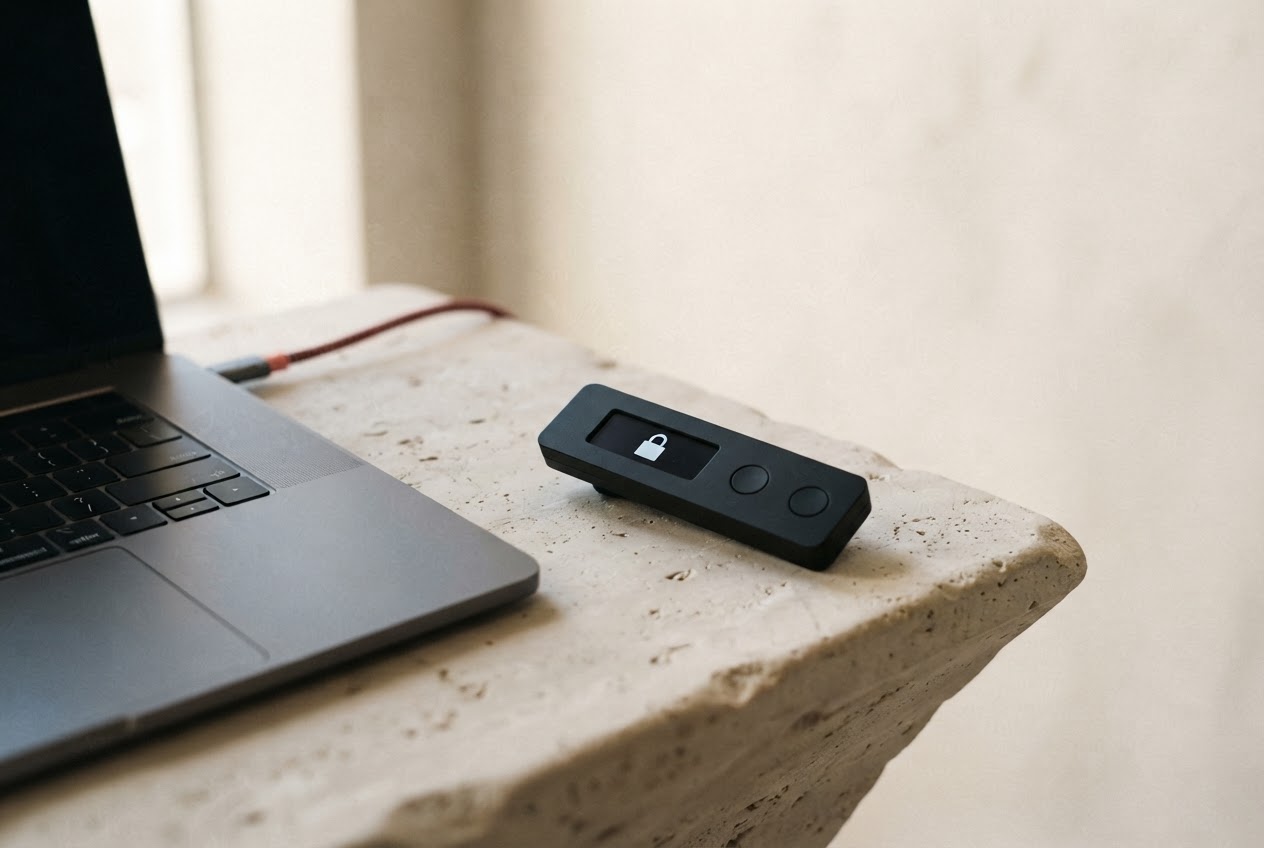
Self-custody begins with a simple idea: your private keys should remain under your control. A hardware wallet helps keep those keys isolated from an internet-connected computer, while its screen gives you a place to check important details before approving an action. The device is one part of a larger routine—not a substitute for careful decisions.
Start by downloading wallet software only from the manufacturer’s official site. During setup, read each prompt on your device and make your recovery backup exactly as instructed. Those recovery words can restore access if a device is lost or damaged, so keep them offline, private, and protected from fire, water, and curious eyes. Never share them with a person claiming to be support.
When sending cryptocurrency, pause to verify the destination and amount on the hardware wallet screen. A familiar-looking address on your computer is not enough. Keep your device firmware current using official guidance, and be wary of urgent messages, giveaways, or links that ask you to “validate” a wallet.
There’s no need to rush. Learn the process with small, deliberate steps, keep a secure record of what you have backed up, and ask questions through official support channels. Good ownership is less about technical confidence than consistent, thoughtful habits.